







Rural communities across the United States face persistent healthcare access challenges, and staffing shortages sit at the center of the crisis. According to the National Rural Health Association, more than 130 rural hospitals have closed since 2010, and many more struggle to keep departments open due to lack of qualified staff. For the 60 million Americans living in rural areas, shortages of nurses, physicians, and allied health professionals often mean delayed care, long travel times, or reduced services.
Healthcare staffing agencies have emerged as critical partners in helping rural facilities sustain care delivery. By providing flexible, compliant, and rapid healthcare staffing solutions, agencies enable hospitals and clinics to fill essential gaps while exploring long-term healthcare workforce solutions and recruitment strategies.
Understanding the Rural Healthcare Staffing Crisis and Workforce Challenges
Rural hospitals face unique challenges that urban counterparts rarely encounter:
- Geographic Isolation: Providers must often relocate significant distances to serve rural areas.
- Lower Compensation Packages: Smaller hospitals may struggle to match salaries offered in urban centers.
- Workload Burdens: Fewer staff members often mean broader responsibilities, contributing to burnout.
- Recruitment Barriers: Limited local talent pools restrict hiring pipelines, fueling healthcare staffing challenges across rural regions.
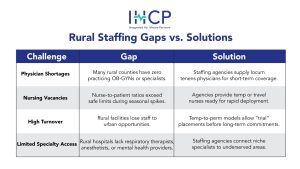
Rural Staffing Gaps vs. Solutions
| Challenge | Gap | Solution |
| Physician Shortages | Many rural counties have zero practicing OB-GYNs or specialists. | Staffing agencies supply locum tenens staffing physicians for short-term coverage. |
| Nursing Vacancies | Nurse-to-patient ratios exceed safe limits during seasonal spikes. | Agencies provide temporary healthcare staffing or travel nurses staffing ready for rapid deployment. |
| High Turnover | Rural facilities lose staff to urban opportunities. | Temp-to-perm models allow “trial” placements before long-term commitments. |
| Limited Specialty Access | Rural hospitals lack respiratory therapists, anesthetists, or mental health providers. | Agencies connect niche specialists using medical staffing solutions. |
This table clearly shows how flexible healthcare staffing models address the rural healthcare staffing crisis.
Recruiting & Retaining Clinicians in Rural Settings Through Healthcare Staffing Solutions
Recruitment in rural healthcare requires more than posting job ads. Facilities must actively sell the benefits of rural living—community ties, slower pace of life, and opportunities for broad clinical practice.
Retention Tactics That Work:
- Loan Repayment Programs: Partnering with federal or state incentive programs to attract graduates.
- Housing Support: Offering subsidized housing or relocation stipends.
- Community Integration: Encouraging clinicians to participate in local schools, events, and organizations to build roots.
- Career Development: Providing ongoing training and leadership opportunities to avoid professional stagnation.
Patient Story: The Impact of Staffing Shortages
In a rural Kansas town, a patient named Linda faced a six-week delay in scheduling a cardiology appointment because her local hospital lacked a specialist. A healthcare staffing agency supplied a locum tenens cardiologist for three months, allowing Linda and dozens of others to access timely care without driving 200 miles. For patients like Linda, staffing solutions aren’t abstract—they’re the difference between waiting dangerously long for care or receiving it close to home.
Flexible Staffing Strategies for Rural Hospitals and Clinics Using Healthcare Staffing Agencies
Healthcare staffing agencies offer creative, flexible staffing strategies that help rural hospitals adapt to unpredictable demand.
- Locum Tenens Physicians: Short-term doctors who cover specialty shortages.
- Temp-to-Perm Placements: Trial periods where clinicians work temporarily before committing full-time.
- Travel Nurses & Allied Health Professionals: Clinicians willing to relocate for 13–26 week assignments.
- Telehealth Partnerships: Remote specialists provide virtual consultations while temp staff handle in-person care.
- Cross-Coverage Agreements: Multiple rural facilities sharing agency staff to ensure no hospital is left uncovered.
Such strategies reflect the growing trend of rapid response healthcare staffing and flexible healthcare staffing models.
Success Stories and Future Partnerships in Rural Healthcare Staffing Solutions
Case Example: Seasonal Surge in Colorado
A rural Colorado hospital serving a mountain resort community faced dramatic spikes in ER visits during ski season. By partnering with a healthcare staffing agency, the facility arranged for 10 additional nurses and 2 orthopedic specialists each winter. These temporary assignments became an annual tradition, ensuring patient safety and protecting staff morale during the busiest months.
Case Example: Telehealth Integration in Appalachia
A network of rural clinics in Appalachia partnered with a staffing agency that offered hybrid telehealth staffing. While agency-provided nurses staffed local clinics, telehealth physicians joined virtually for consults. This model improved chronic care management and strengthened hospital staffing services across the region.
These success stories demonstrate how agencies and rural facilities can form future-facing partnerships, using flexible models to stabilize care delivery.
The Future of Rural Staffing Partnerships and Healthcare Workforce Solutions
Looking ahead, rural healthcare staffing trends show continued evolution driven by:
- Hybrid Telehealth Models: Expanding access to specialists through virtual care combined with on-site temp staff.
- Regional Staffing Collaboratives: Rural hospitals pooling resources and sharing agency partners for greater efficiency.
- AI-Enhanced Workforce Planning: Forecasting 2025 healthcare workforce shortage challenges
- Policy Support: Federal and state programs offering greater funding for rural recruitment and locum tenens coverage.
- Community Integration Programs: Agencies helping clinicians transition into rural life by supporting housing, education, and family needs.
For rural America, healthcare staffing agencies are no longer a stopgap, they are long-term partners shaping the future of equitable care access.
Conclusion: Why Rural Hospitals Rely on Healthcare Staffing Agencies
The rural healthcare staffing crisis is one of the most urgent challenges facing the U.S. healthcare system. Without adequate staffing, patient access and safety are compromised. But with the support of healthcare staffing agencies providing healthcare staffing solutions, rural hospitals can bridge gaps, introduce flexible models, and explore long-term recruitment and retention strategies.
From locum tenens staffing to hybrid telehealth partnerships, staffing solutions are giving rural communities renewed hope for sustainable care delivery. As partnerships deepen and new technologies emerge, the future of rural healthcare may rest not just in government funding or local pipelines, but in the strategic role of staffing agencies.
FAQ: Common Questions About Rural Healthcare Staffing Challenges
Q: Why do rural areas struggle to staff healthcare roles?
A: Rural areas face geographic isolation, lower compensation compared to urban centers, and limited local training pipelines. Clinicians often prefer urban environments with broader opportunities, leaving rural facilities understaffed.
Q: How can temp or flexible staffing help rural facilities?
A: Temporary healthcare staffing—includingtravel nurse staffing, locum tenens staffing, and temp-to-perm hires—allow rural hospitals to maintain safe staffing levels, expand specialty access, and respond to seasonal surges without permanent overhead.
Q: What retention tactics work for rural settings?
A: Retention strategies include offering housing stipends, student loan repayment, professional development, and community integration programs. When clinicians feel both professionally supported and personally connected, they are more likely to stay.