







Staffing challenges have become one of the defining issues in U.S. healthcare. Hospitals and clinics are struggling to balance patient demand with shrinking workforces and ongoing staffing shortages. According to the Bureau of Labor Statistics, the healthcare sector added more than 650,000 jobs in 2024, yet hospitals still report widespread vacancies. This gap has pushed many facilities to turn to healthcare temp staffing solutions, medical staffing solutions, and broader healthcare staffing solutions as a way to remain flexible, responsive, and compliant.
In this guide, we’ll examine what temporary healthcare staffing means in healthcare, how facilities scale their workforce, and what trends are shaping its role in 2025—especially as healthcare staffing challenges and the 2025 healthcare workforce shortage continue to grow.
What Is Healthcare Temp Staffing and How It Works | Temporary Healthcare Staffing Explained
Healthcare temp staffing involves hiring clinicians and support staff on a short-term basis to fill immediate needs. These placements are typically managed through a healthcare staffing agency, which recruits, credentials, and deploys professionals to hospitals, clinics, nursing homes, and urgent care facilities.
How It Works:
- Hospital Request: A facility identifies a staffing gap (e.g., flu season, sudden resignations, or specialty shortages). Many rely on temp staff as part of their core hospital staffing services.
- Agency Match: The staffing agency selects candidates from its roster of pre-credentialed clinicians, including travel nurse staffing and per-diem healthcare staffing professionals.
- Rapid Deployment: Staff are placed for per-diem shifts, short-term contracts, or seasonal roles—often through rapid response healthcare staffing programs.
- Compliance Verification: Licensure, background checks, and immunizations are verified before the clinician starts.
This model allows hospitals to avoid the lengthy recruitment cycle of permanent hires while ensuring safe staffing levels through reliable medical staffing support.
Benefits of Temp Staffing for Hospitals & Clinics | Healthcare Staffing Solutions for 2025
Temp staffing has become more than just a “band-aid” solution, it’s now a strategic workforce tool and part of many systems’ broader healthcare workforce solutions.
- Rapid Response: Hospitals can fill positions in days or even hours.
- Flexibility: Staff can be added or reduced based on census changes using flexible healthcare staffing models.
- Cost Management: No long-term salary or benefits obligations for short-term hires.
- Access to Specialists: Temp staff often include travel nurses, respiratory therapists, and allied health professionals who bring niche expertise through targeted medical staffing solutions.
- Staff Morale: By easing workloads during surges, temp staff reduce burnout among permanent employees.
Local Anecdote: Rural Facility Example
In rural Montana, a 75-bed community hospital faced a predictable surge in maternity care every summer, when seasonal workers arrived in the region. By maintaining a standing contract with a healthcare staffing agency—often considered among the best healthcare staffing agency solutions in the region— the facility was able to bring in three temporary labor-and-delivery nurses each year during June–August. This prevented service delays, kept patient satisfaction high, and allowed the hospital to meet its care obligations without hiring permanent staff that weren’t needed year-round.
How to Scale Up or Down with Temp Staff | Flexible Healthcare Staffing Models
The primary advantage of temporary healthcare staffing is scalability. Facilities can expand or contract their workforce based on patient demand.
Actionable Tips:
- Maintain a Standby Roster: Keep a pool of pre-credentialed nurses and allied staff ready to deploy.
- Leverage Per-Diem Pools: Use per-diem healthcare staffing for daily fluctuations, especially in emergency departments.
- Use Seasonal Contracts: Plan in advance for predictable spikes such as flu season, holiday travel, or regional events.
- Deploy Rapid Credentialing Tools: Automate background checks and license verification to onboard staff quickly.
- Cross-Train Temp Staff: Encourage agencies to provide clinicians with diverse unit experience, allowing hospitals to place them flexibly.
These strategies help hospitals adapt to healthcare staffing trends while avoiding long-term commitments.
How to Build and Manage a Pool of Qualified Temp Talent | Healthcare Recruitment Consulting Insights
Hospitals that regularly rely on healthcare temp staffing often maintain relationships with agencies and cultivate their own internal talent pools.
Steps to Build a Strong Pool:
- Partner with Reputable Agencies: Offering healthcare recruitment consulting and choose vendors with Joint Commission certification and transparent compliance processes.
- Pre-Credential in Advance: Keep active files for temp staff you’ve used before, including immunizations and licensure.
- Track Performance: Collect feedback from unit managers on temp staff performance for future reference.
- Maintain Engagement: Stay in contact with temp clinicians between assignments so they remain interested in returning.
- Offer Flexible Schedules: The more autonomy clinicians have, the more likely they’ll be to accept future shifts.
Pro Tip: Many hospitals now build internal float pools that blend per-diem employees with agency-based professionals to strengthen their hospital staffing strategy.
Trends in Healthcare Temp Staffing for 2025 | Healthcare Staffing Trends & Workforce Insights
The role of temp staffing is evolving, and emerging healthcare staffing trends point to several major shifts:
- Technology-Driven Matching: AI-powered platforms now match clinicians to shifts within hours.
- Rise of Hybrid Telehealth + Onsite Staffing: Specialists can provide teleconsultations while temp staff manage bedside care.
- Increased Regulation: States are tightening rules on nurse-to-patient ratios, which means more facilities are relying on temp staff to stay compliant.
- Focus on Burnout Prevention: Hospitals are proactively using temp staff to ease workloads, not just in crisis situations.
- Rural Reliance on Temp Staffing: Smaller facilities increasingly rely on temporary healthcare staffing as a lifeline.
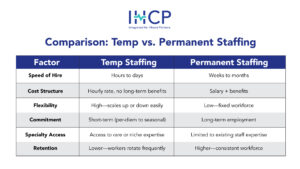
Comparison: Temp vs. Permanent Staffing | Medical Staffing & Hospital Staffing Overview
| Factor | Temp Staffing | Permanent Staffing |
| Speed of Hire | Hours to days | Weeks to months |
| Cost Structure | Hourly rate, no long-term benefits | Salary + benefits |
| Flexibility | High—scales up or down easily | Low—fixed workforce |
| Commitment | Short-term (per-diem to seasonal) | Long-term employment |
| Specialty Access | Access to rare or niche expertise | Limited to existing staff expertise |
| Retention | Lower—workers rotate frequently | Higher—consistent workforce |
Both models have value, but in times of volatility, temp staffing provides agility that permanent hires cannot.
Conclusion | Building Strong Healthcare Workforce Solutions
Healthcare temp staffing has shifted from a reactive solution to a strategic workforce strategy in 2025. Hospitals and clinics use temp staff to manage seasonal surges, cover specialty gaps, and protect staff morale, while rural facilities rely on them to keep doors open year-round.
By maintaining a standby roster of pre-credentialed clinicians, leveraging technology-driven matching, and partnering with reliable healthcare staffing agencies, healthcare organizations can build a truly flexible workforce.
Temp staffing isn’t a replacement for permanent hires—but it’s a vital complement that ensures healthcare systems remain resilient, adaptable, and patient-focused in uncertain times.
FAQ | Healthcare Temp Staffing & Staffing Agency Answers
Q: What is temp staffing in healthcare and how does it work?
A: Temp staffing involves hiring clinicians for short-term roles through a healthcare staffing agency. Facilities submit requests, and agencies provide pre-credentialed professionals ready to work quickly.
Q: How do providers quickly build temp staffing pools?
A: Pre-credentialing staff in advance, maintaining performance records, using per-diem healthcare staffing, and partnering with accredited agencies are key steps.
Q: What trends are shaping healthcare temp staffing in 2025?
A: AI-powered matching, hybrid telehealth models, strict regulation, rural staffing reliance, and burnout prevention are among the top healthcare staffing trends.